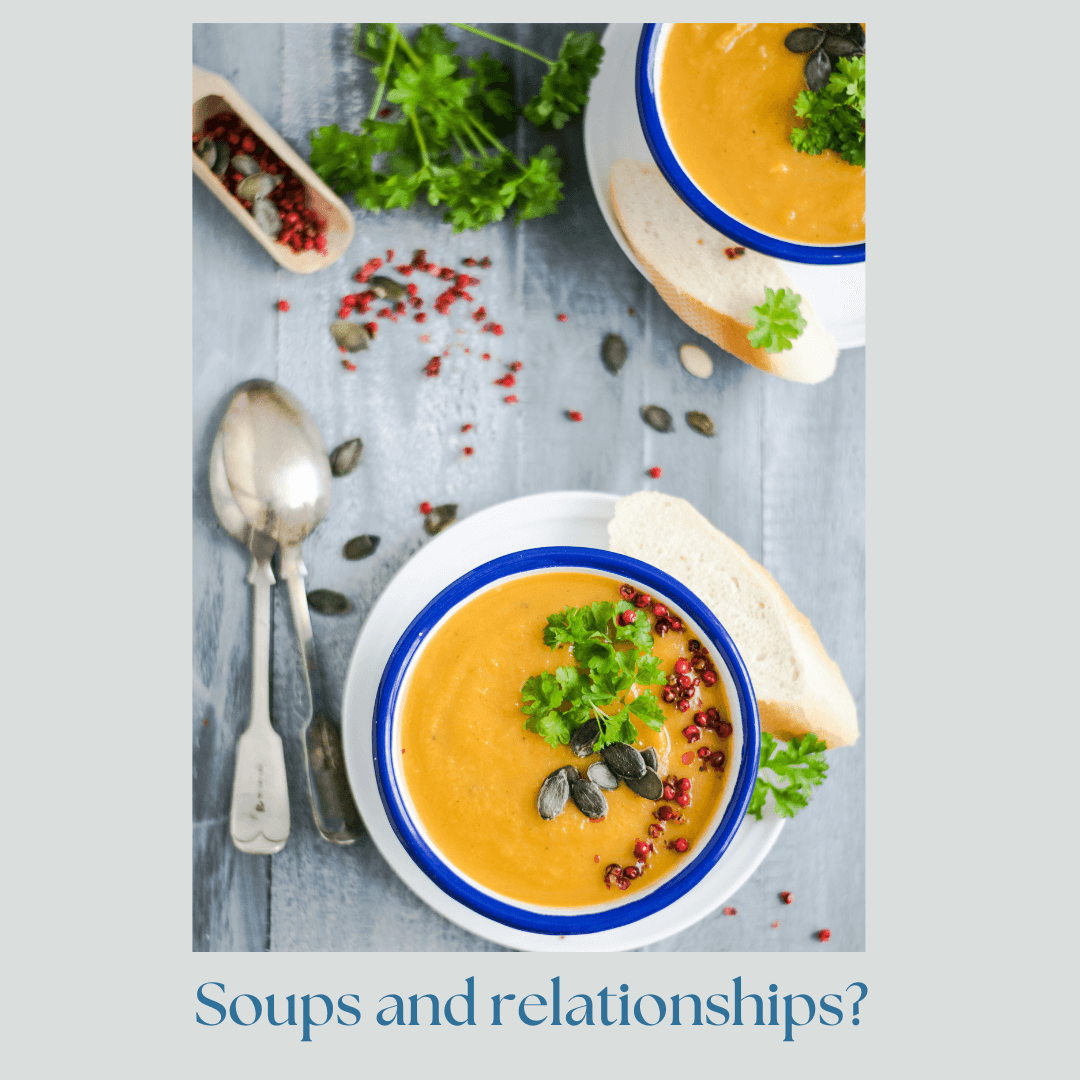
You might be wondering what a picture of a soup has to do with therapy.
There is a reason. I am not only a therapist. I have a passion for cooking, and I love trying new recipes. And one of my favorite shows is Chef’s Table on Netflix.
So, what is the connection?
The answer is simple.
One thing all chefs have in common is their dedication to selecting and using the tastiest, freshest ingredients. Sometimes they care directly for the garden and make sure that they harvest the best vegetables.
Cooking and psychotherapy?
Yes, I’d say there is a connection.
When working with couples, I often like to make an analogy between their relationship dynamic and cooking a soup. By using this analogy, I prompt partners to reflect on their well-being and how this affects the relationship.
What skills and qualities do you bring to your partnership that would improve the experience of it?
To cook a good soup we need tasty, fresh ingredients, that are a good mix together. Add spices and love for cooking, invest time in it, and there it is. At the end of the day, you can enjoy its taste, feel comforted by it, and nourish your body with healthy ingredients.
I see a relationship as being similar. A good one takes partners that care for their mental and physical health, have a high compatibility level, invest quality time in the relationship, and share mutual love to care for it. So that when you come home, you find a relaxing, safe, loving atmosphere.
This takes me to the idea of self-responsibility. Of taking accountability for caring about our well-being, keeping stress levels low, for cultivating our relationship with love and appreciation instead of nagging and escalating discussions.
This is all because our moods greatly affect our communication and how we perceive our partner. We tend to give people more benefit of the doubt when we’re in a good mood, and less when we’re in a bad mood.
The more stressed we are, the gloomier the mood. The gloomier the mood, the higher the impact on ourselves and our partners.
Being able to regulate our negative emotions and our stress levels is a life skill for our partnership. But it is all worth it because, by doing that, you are co-creating a nourishing relationship that will contribute itself to higher well-being.
The main takeaway might be just a soup. Or it might be the understanding that the contribution we have to our relationship is to care for our mental states, to communicate to our partner about our feelings and needs, and to take time to nourish and replenish our energy levels.
\